How To Choose A Folding Dining Table For A Rented Flat
A practical step-by-step guide to how to choose a folding dining table for a rented flat, including preparation, instructions, common issues, tips, and next steps.
How To Choose A Folding Dining Table For A Rented Flat
Choosing a folding dining table for a rented flat involves balancing space, functionality, and portability. This guide helps you assess your living area, select appropriate materials and mechanisms, and find a table that fits your lifestyle without risking your security deposit.
Fast Answer
- First, measure your available floor space for the table when it is both open and folded, and use painter's tape to visualise the footprint.
- Prioritise tables that are lightweight, easy for one person to operate, and have built-in floor protectors to prevent damage to the property.
Before You Start
- Measure the maximum dimensions for the table when fully extended for dining, leaving room for chairs and movement.
- Identify a dedicated storage spot for the table when folded and measure this space to ensure a proper fit.
- Review your rental agreement for any clauses related to furniture, wall-mounting, or potential floor damage.
- List the number of people you need to seat regularly versus occasionally to determine the required size and flexibility.
Step-by-Step Instructions
Assess Your Space and Layout
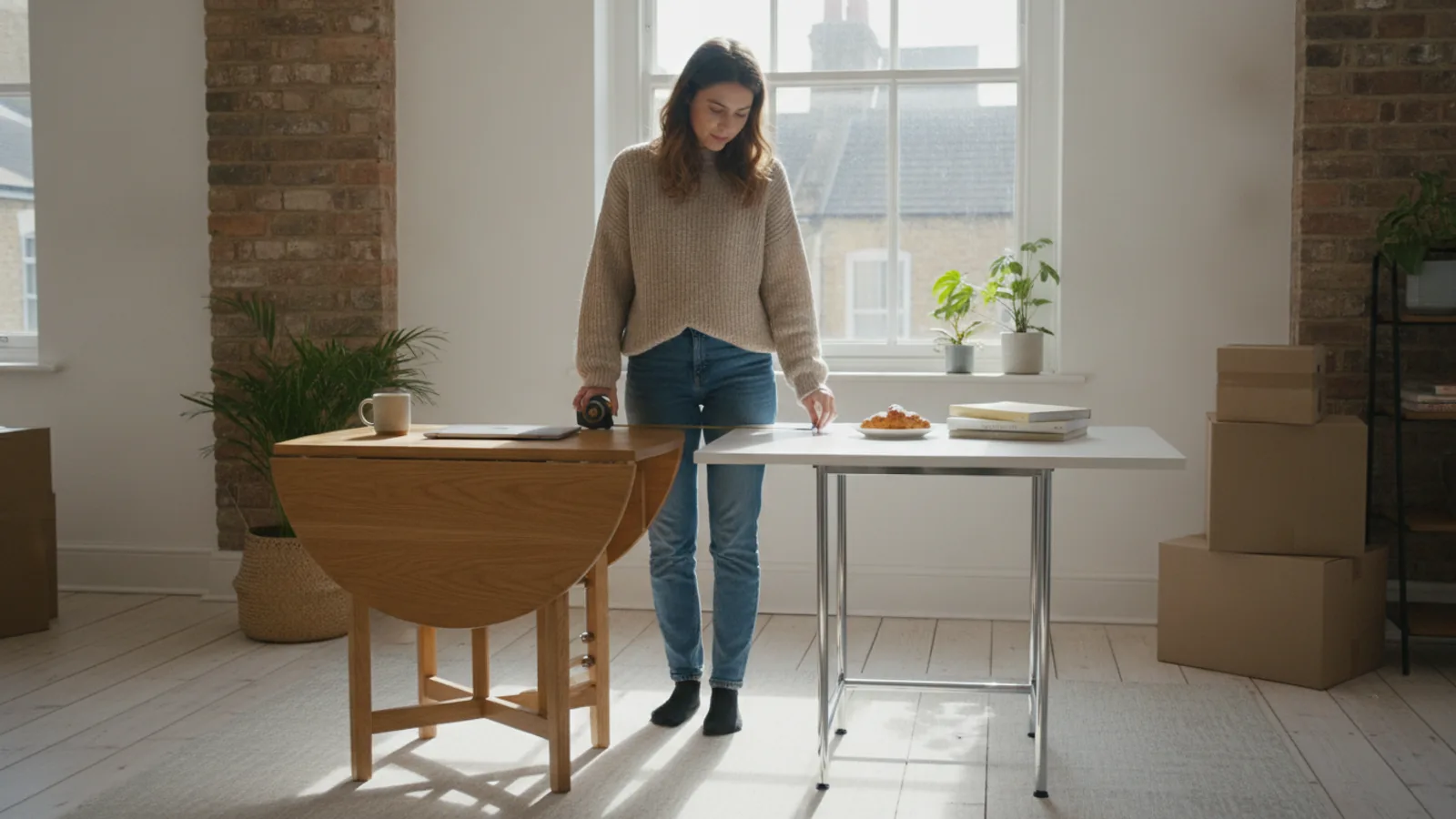
Your first critical action is to measure the dining area and potential storage space with a reliable measuring tape. Note down the length, width, and height available. Once you have target dimensions from a potential table, use painter's tape on the floor to outline its footprint, both when fully extended and when completely folded. This creates a tangible preview of how the table will occupy your room. The most practical check is to then physically interact with this taped-off space. Place a chair next to it and try to sit down and stand up. Walk around the outlined area as if you were carrying dishes. Is there enough clearance to move freely without bumping into other furniture or walls? This physical walkthrough is vital because it translates abstract measurements into real-world functionality, preventing you from choosing a table that technically fits but makes the room feel cramped and unusable, a common mistake in smaller flats.
Determine Folding Mechanism Type
Next, investigate the different types of folding mechanisms to find one that suits your needs and physical ability. Common styles include drop-leaf, where hinged sections on the sides fold down; gateleg, which uses swinging legs to support the leaves; and butterfly leaf, where a central panel folds and stores inside the table. Your action here is to research these types by viewing online videos that demonstrate their operation. Pay attention to how many steps are required, whether it looks like a one-person job, and the smoothness of the motion. The practical check is to evaluate your own usage pattern. Will you be folding and unfolding the table daily, or only for special occasions? A mechanism that is stiff, heavy, or requires two people can become a significant annoyance if used frequently. This evaluation matters because choosing an overly complex or physically demanding mechanism will discourage you from using the table's folding feature, defeating its primary purpose as a space-saving solution for your flat.
Evaluate Materials and Durability
Consider the table's construction material, as this impacts its weight, longevity, and appearance. Common options include solid wood, which is durable but heavy; manufactured wood like MDF with a laminate or veneer finish, which is lighter and often more budget-friendly; and metal frames, which offer sturdiness with a modern look. Your task is to weigh the pros and cons based on your rental situation. A lightweight laminate table is easy to move and clean, making it ideal for renters. Your practical check is to carefully read the product specifications to distinguish between solid wood and a thin wood veneer, as their care requirements and durability differ significantly. Additionally, inspect images for pre-installed floor protectors on the legs. This check is crucial because the material directly affects portability and the risk of property damage. A table that is too heavy will be a burden during future moves, while one without floor protection can easily scratch floors, jeopardizing your security deposit.
Consider Seating Capacity and Comfort
You must verify that the table can comfortably accommodate your desired number of guests without feeling crowded. Manufacturers will state a seating capacity, such as 'seats four to six people,' but this can be optimistic. Your action is to look beyond this number and examine the table's design, particularly the placement of its legs and supports. A table with legs at the four corners provides maximum room for knees and chairs, whereas a pedestal or trestle base can sometimes interfere with seating arrangements, especially when the table is extended. The practical check involves looking at diagrams or user-submitted photos that show the table with chairs around it. Try to estimate the clearance between each chair. This step is important because a table's true capacity is determined by comfortable use, not just surface area. An improperly designed table might technically fit six chairs, but if guests are knocking knees or straddling a central support, it fails as a functional dining space.
Check for Renter-Friendly Features
Proactively look for features designed to protect your rental property from accidental damage. As a renter, your responsibility is to leave the flat as you found it, and furniture is a common source of wear and tear. Your action is to scrutinize product listings and images for specific protective elements. Prioritise tables that have non-marking feet, such as those with built-in felt pads or soft plastic caps. If the table has wheels for easy movement, they should be made of a soft material and, critically, must have a locking mechanism to keep the table stationary during use. The essential check is to confirm these features are present before you buy. If a table you like lacks them, decide if you are willing and able to add them yourself, for example, by purchasing adhesive felt pads. This check matters deeply because preventing floor scratches and scuffs is one of the easiest ways to ensure the full return of your security deposit when you decide to move out.
Plan for Assembly and Future Portability
Finally, think about the entire lifecycle of the table in your rental, from its arrival in a box to the day you have to move it to a new home. Before purchasing, your action should be to find and review the assembly instructions, which are often available as a downloadable document on the product page. Assess the number of parts, the complexity of the diagrams, and the tools required. Is it a project you can handle alone? The practical check is to consider the reverse process: disassembly. Is the table constructed with simple screws and bolts that can be easily undone, or does it use complex joinery and adhesives that make it a permanent fixture? This consideration is vital for any renter. A piece of furniture that is a nightmare to build will be an even bigger one to take apart and transport. Choosing a table designed for straightforward assembly and disassembly will save you immense stress and effort during future moves, making it a truly practical choice for a non-permanent home.
Quick Reference
| Situation | Action | Why it helps |
|---|---|---|
| You live in a very small studio flat. | Choose a narrow console table that folds out, or a wall-mounted drop-leaf table that has zero footprint when not in use. | This maximises your available living space for other activities and prevents the dining area from dominating the room's function. |
| You are concerned about scratching wooden floors. | Select a table with pre-installed felt pads or soft, locking wheels. If it lacks these, purchase and apply adhesive felt protectors before use. | This is a simple, proactive measure that provides essential protection against floor damage, which is a leading cause of security deposit deductions. |
| You frequently host a varying number of guests. | Opt for a table with a butterfly leaf or multiple drop-leaves, which allows for several size configurations, from a small console to a large dining surface. | This provides the greatest flexibility, enabling you to adapt the table to your immediate social needs without owning a permanently large piece of furniture. |
Common Issues
- The folding table feels wobbly after assembly.: First, double-check that every screw and bolt is fully tightened. If the issue persists on a level floor, you can add small, adjustable feet or use furniture shims under the legs to create stability.
- The surface of the table gets scratched easily.: Always use placemats and coasters to protect the surface from heat, moisture, and utensils. For a laminate top, avoid abrasive cleaners. For wood, use a wax repair stick that matches the finish for minor scratches.
- The folding mechanism is stiff or difficult to operate.: Apply a small amount of a silicone-based lubricant to the hinges and any sliding tracks. Gently open and close the mechanism several times to distribute the lubricant and ease the movement.
Advanced Tips
- Look for folding tables that incorporate hidden storage, such as a small central cabinet or drawers, perfect for holding linens, cutlery, or even folding chairs.
- Consider a round or oval folding table. The absence of sharp corners can improve traffic flow and make a small space feel less cluttered and safer to navigate.
- If possible, choose a table with a standard finish (like white, black, or a common wood tone) that will be easy to match with other furniture as your decor evolves.
Final Checklist
- Confirm the table's open and folded dimensions will fit comfortably in your designated spaces.
- Verify the material's weight is manageable for you to move and assemble, ideally without assistance.
- Ensure the table has renter-friendly features like floor protectors or locking wheels.
- Double-check your tenancy agreement for any rules about furniture or wall attachments before buying.
FAQ
What's the best folding mechanism for daily use?
For frequent, daily transformations, a simple drop-leaf or gateleg table is often the most convenient. These mechanisms are typically straightforward and can be operated by one person without much effort, making them ideal for a breakfast nook or workspace.
Can I use a wall-mounted folding table in a rental?
You must check your tenancy agreement first, as many landlords prohibit drilling into walls. If it is permitted, ensure you use the correct type of wall anchors for your wall material and are prepared to properly fill and paint over the holes when you move out to avoid deposit issues.
How do I choose chairs for a folding table?
Look for chairs that are themselves foldable or stackable for efficient storage. Check the chair's seat height against the table's height to ensure comfortable seating with enough legroom. Lightweight chairs are also easier to move around when you are reconfiguring the table.